The Card Game

Six heroes. One line to hold.

We watched the trailer and couldn't help ourselves.

When we offered to help design a card game for Sentinel 6, you said it sounded good. So we went ahead and designed one.

Your Kickstarter says Sentinel 6 is the first story of a whole universe, and that games are part of where it's headed. A card game is a natural first step: it puts six heroes in people's hands, and it gives every kid who sees themselves in one of them something to collect, trade, and play.

The Sentinel 6 logo

Every image in this deck is official Sentinel 6 artwork or a still from the official trailer.
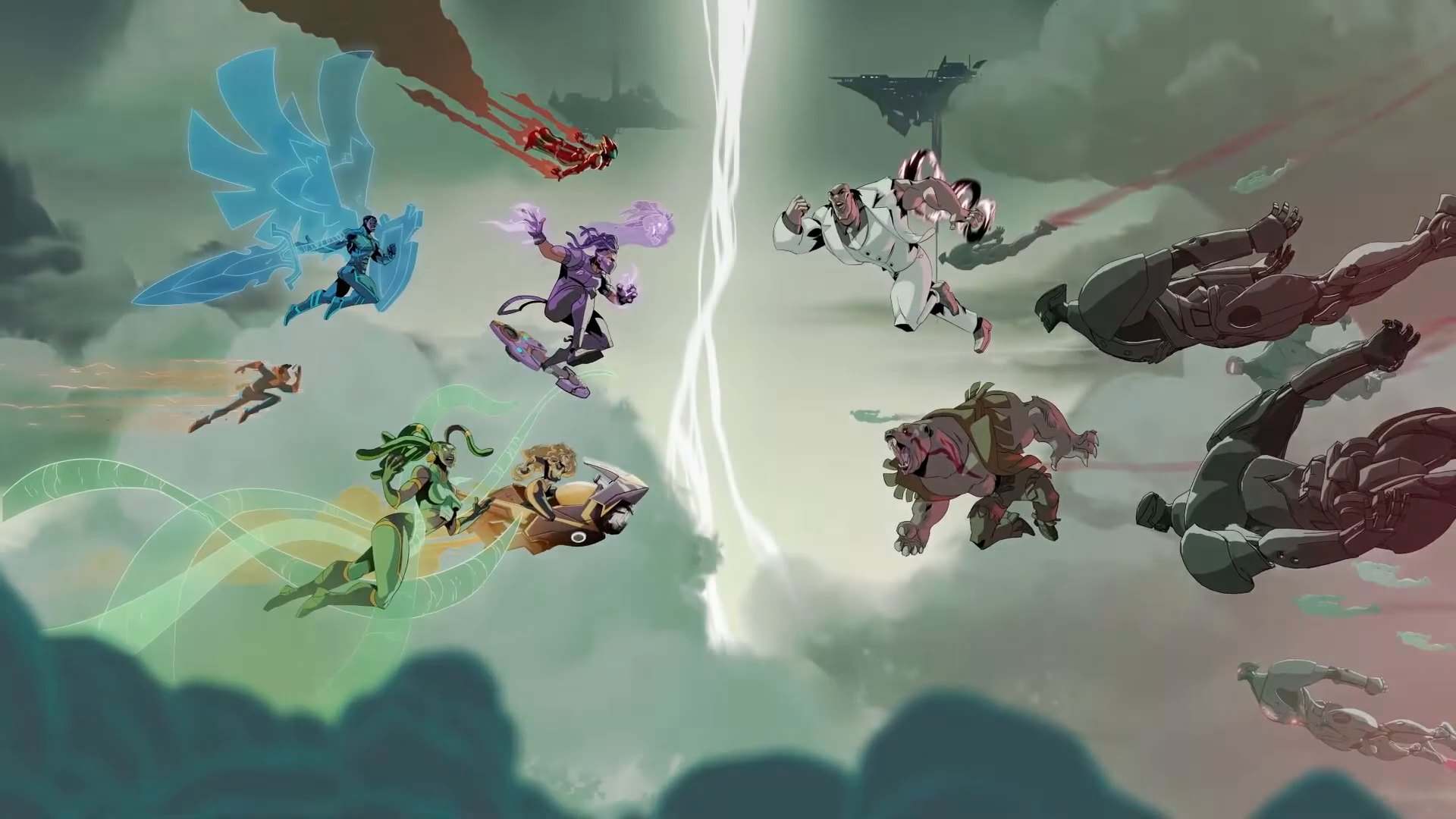
The six heroes charging into the horde through the clouds, from the Sentinel 6 trailer

Every fight we've seen ends with the six surrounded.

An army of robots stamped with the same insignia. Waves of enemies closing in from every side. Six heroes who don't fully trust each other yet, holding the line anyway.

That's the moment the game is built around. One player is the Sentinel 6. The other is everything coming for them.
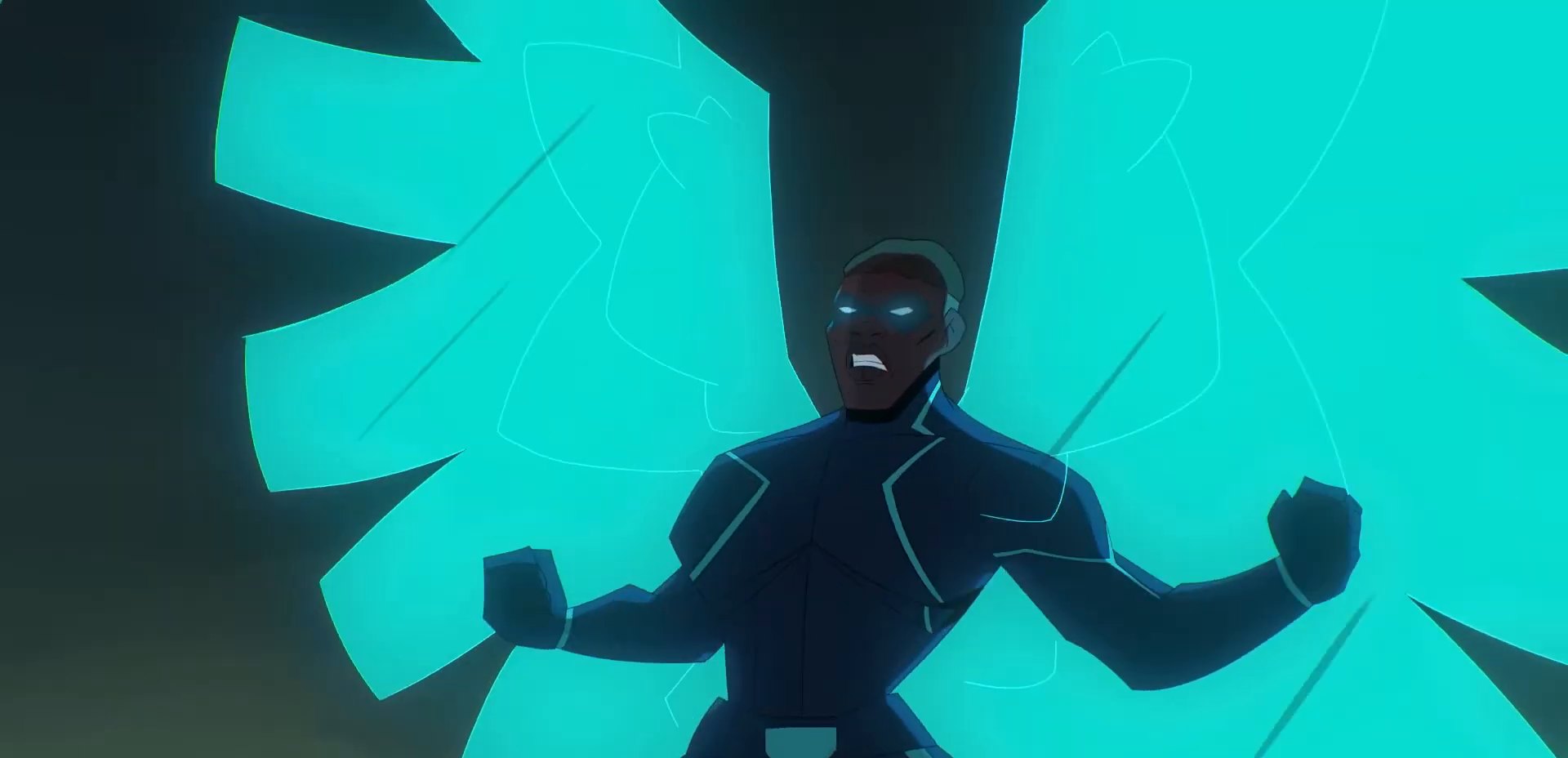
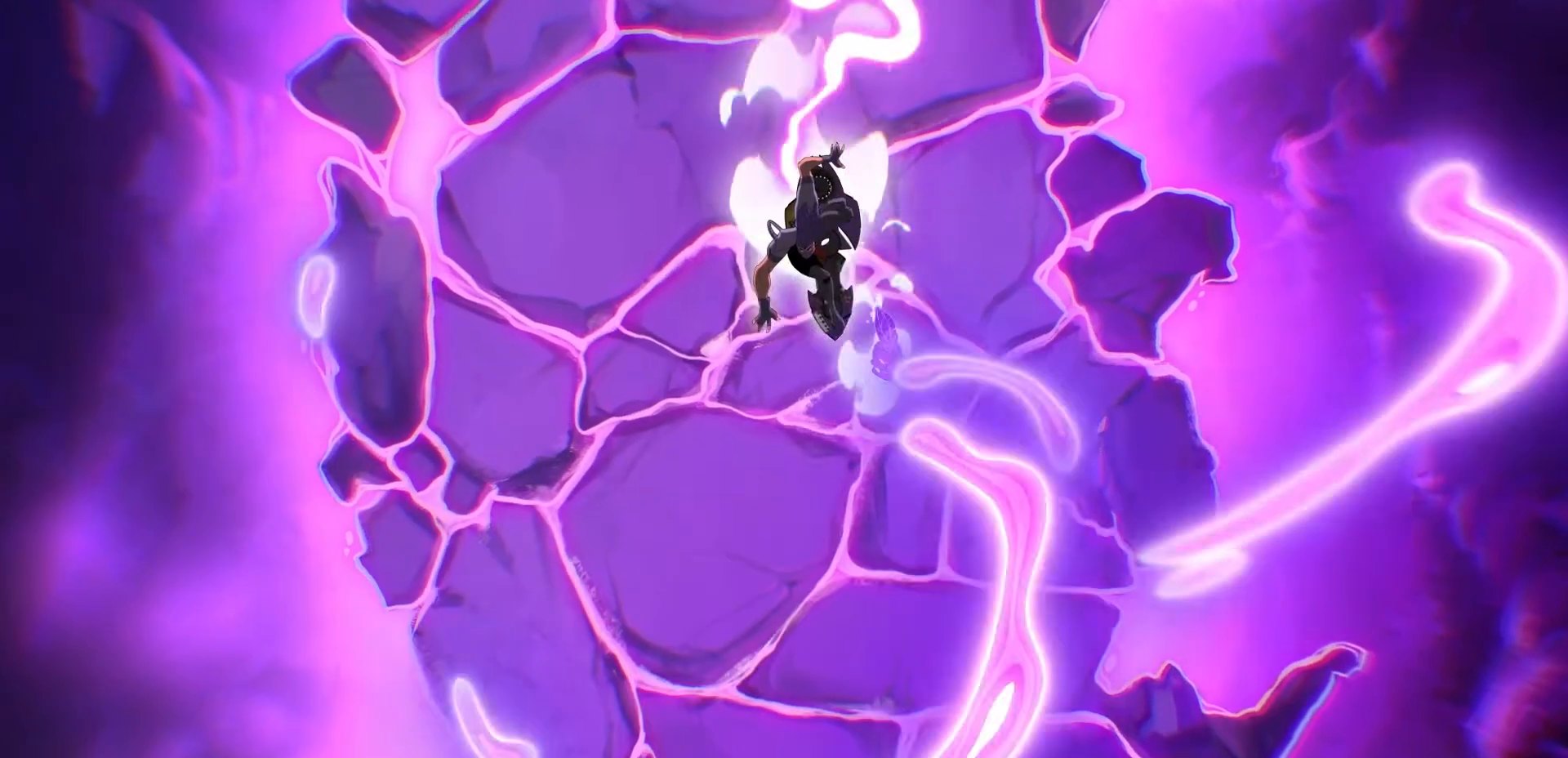
Six aspects of one power, one hero each.

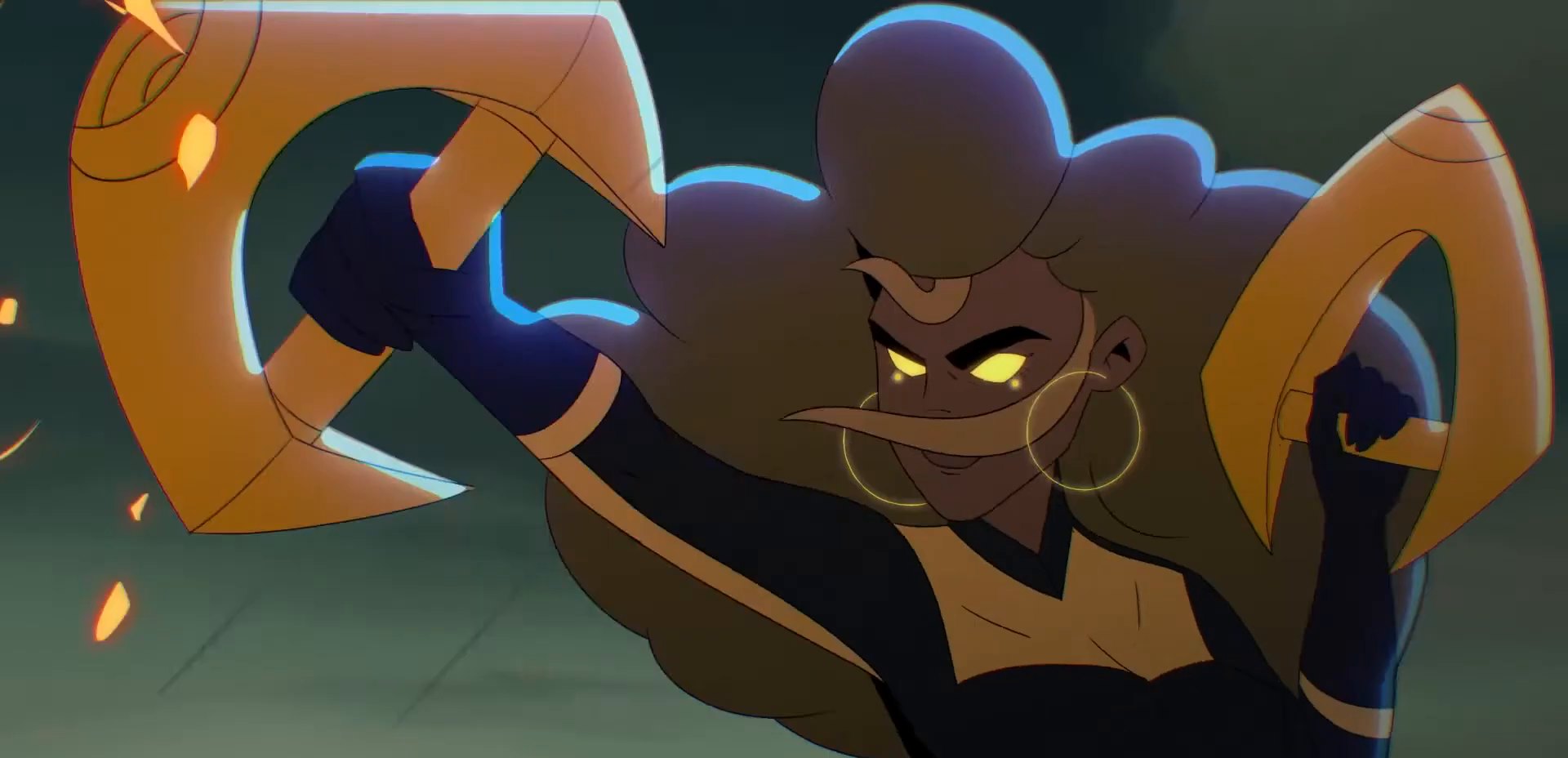
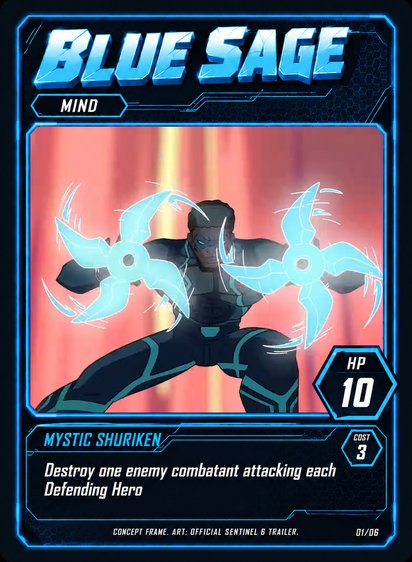
Blue Sage
Blue Sage
Mind
Saint Dubois
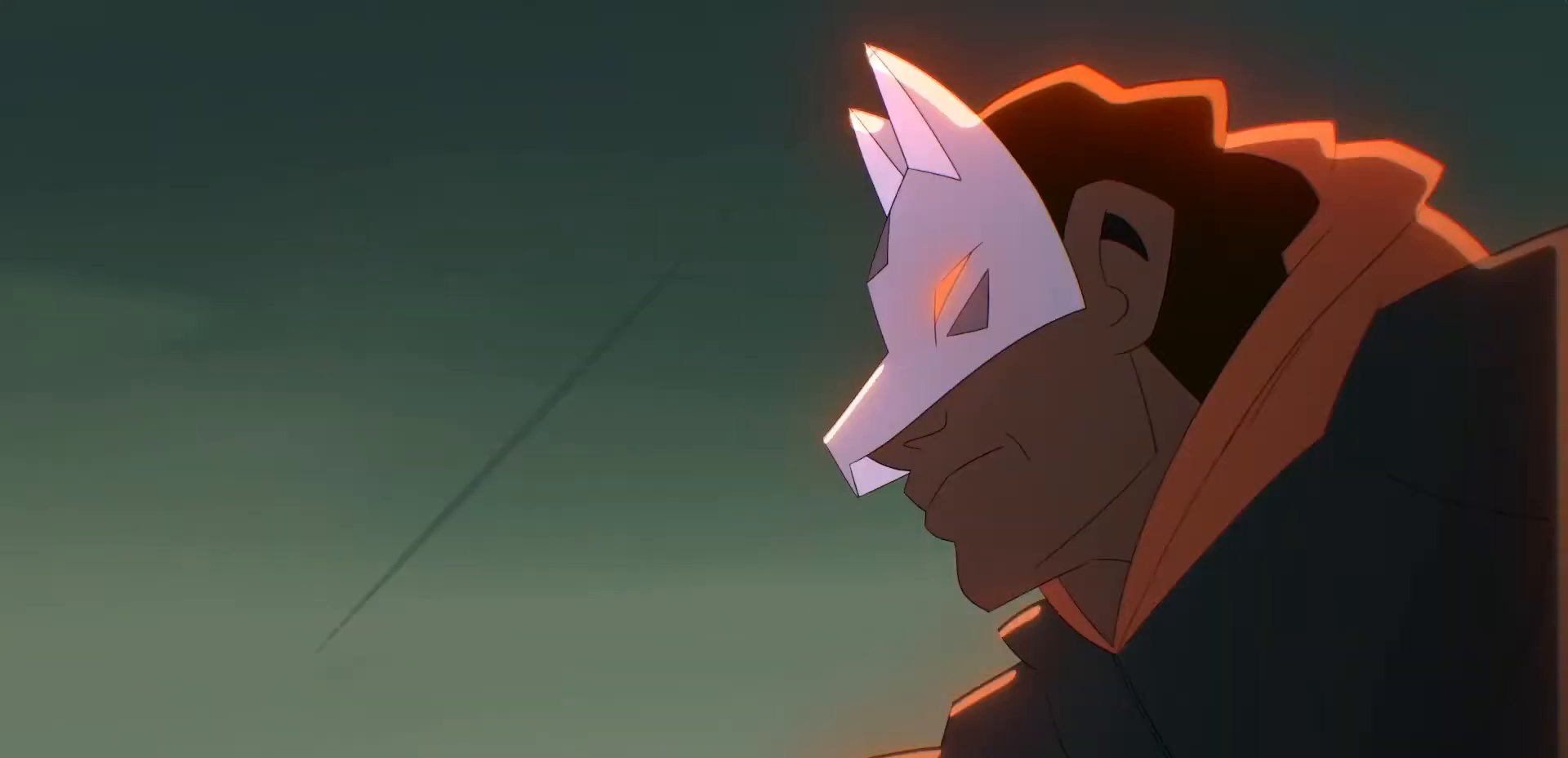
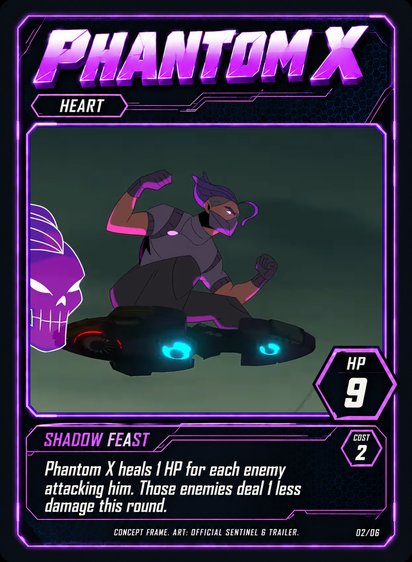
Phantom X
Phantom X
Heart
Ali Washington
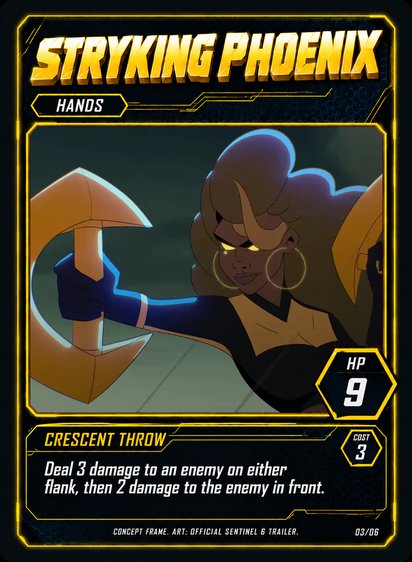
Stryking Phoenix
Stryking Phoenix
Hands
Our best guess
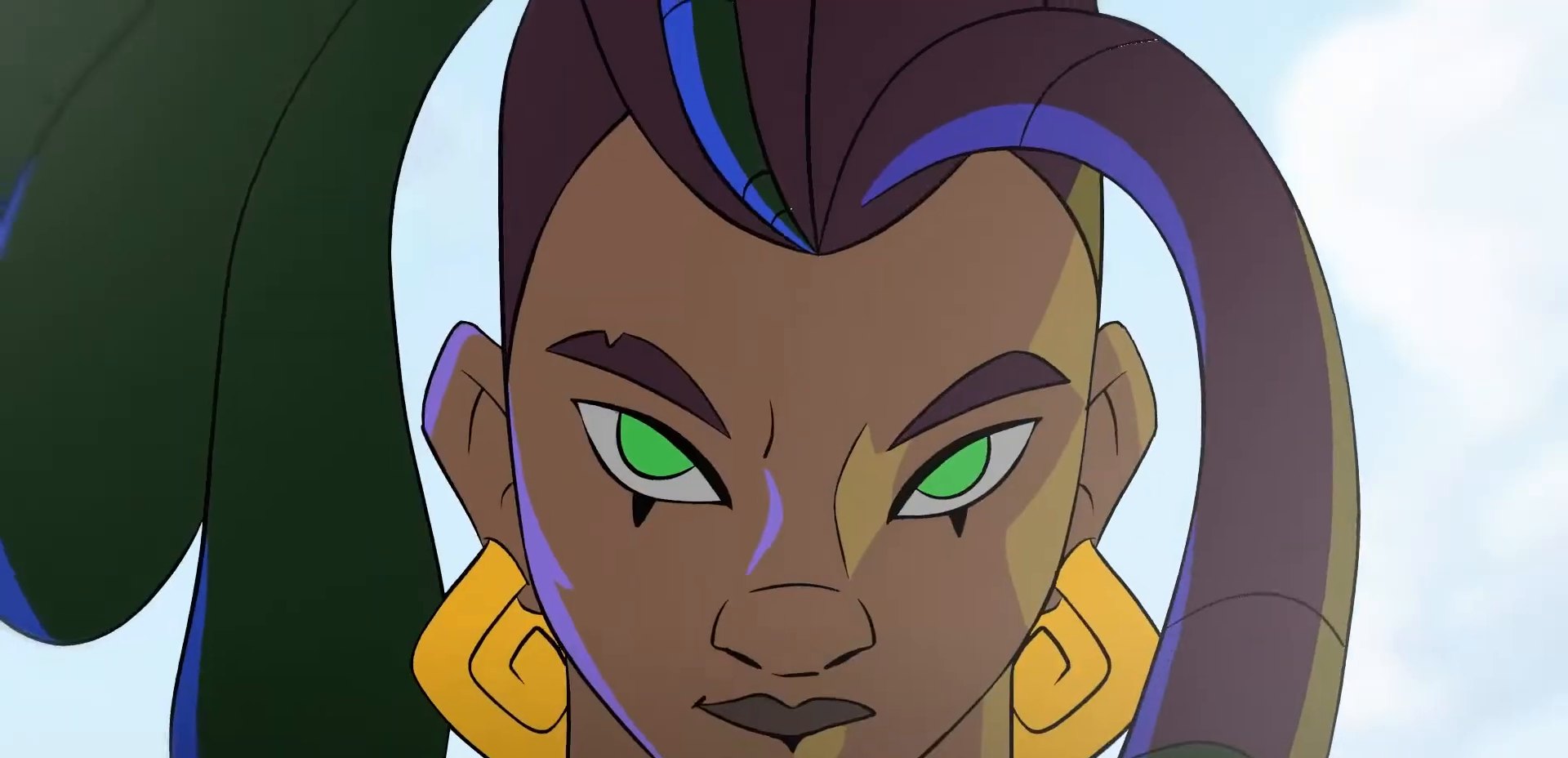
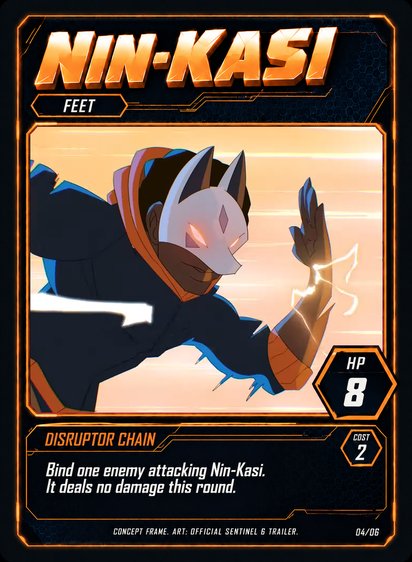
Nin-Kasi
Nin-Kasi
Feet
Chafalumisa
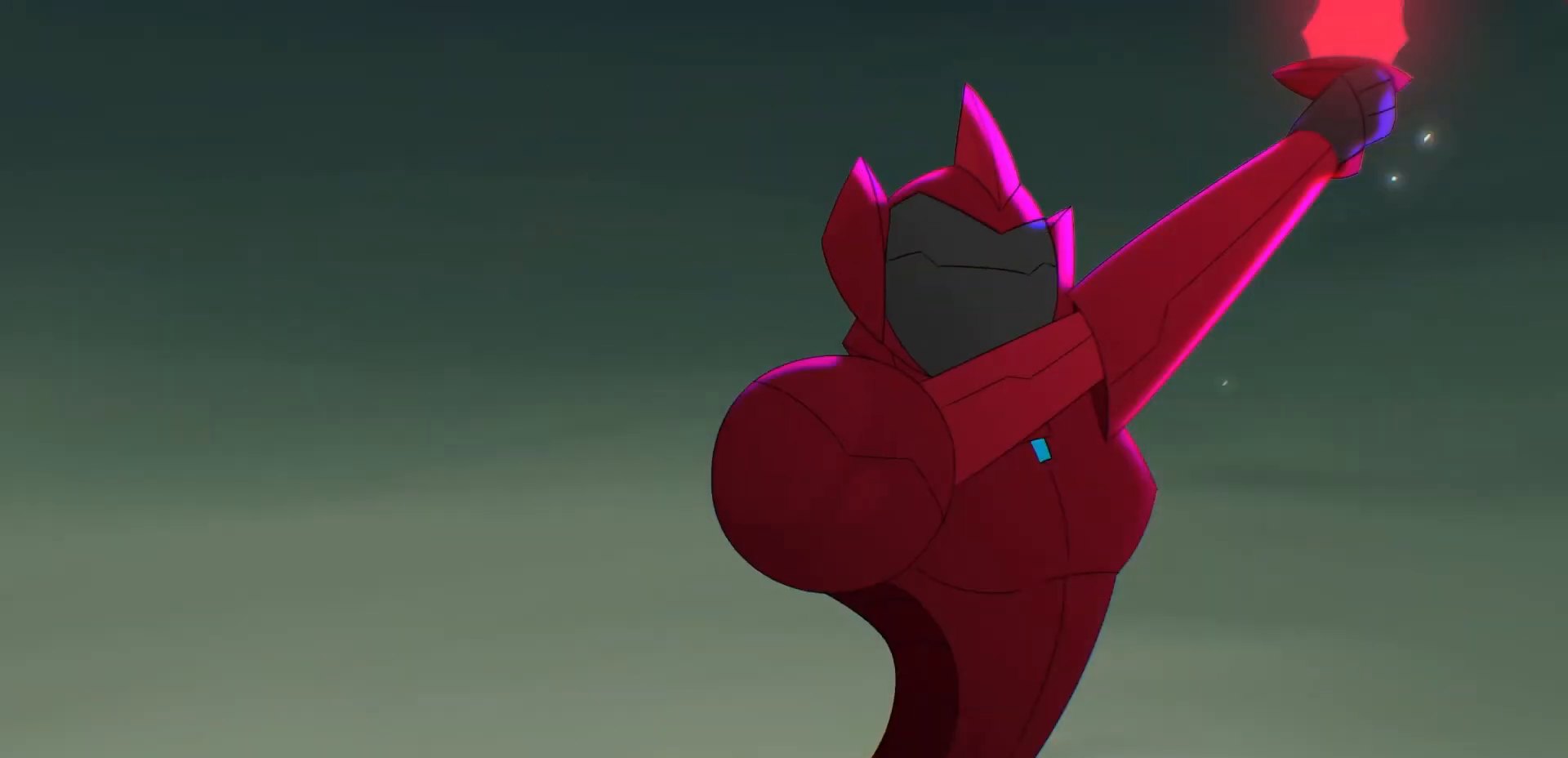
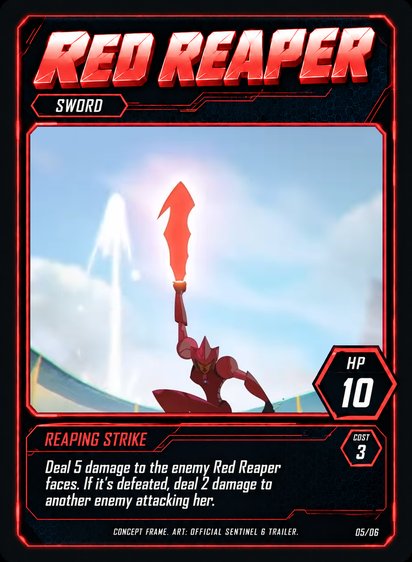
Red Reaper
Red Reaper
Sword
Our best guess
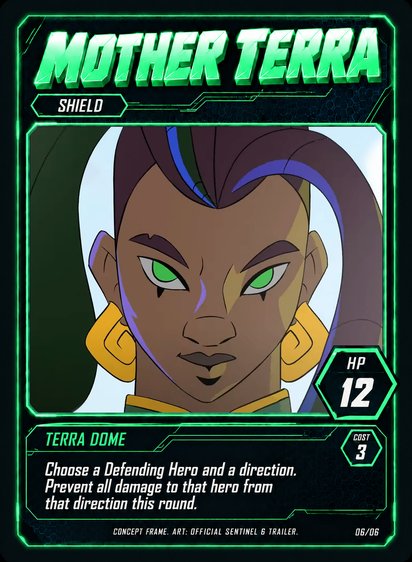
Mother Terra
Mother Terra
Shield
Our best guess

Each hero's color comes from their glow in the trailer and their block of the Sentinel 6 logo. In the game, those colors become how you read a card at a glance.
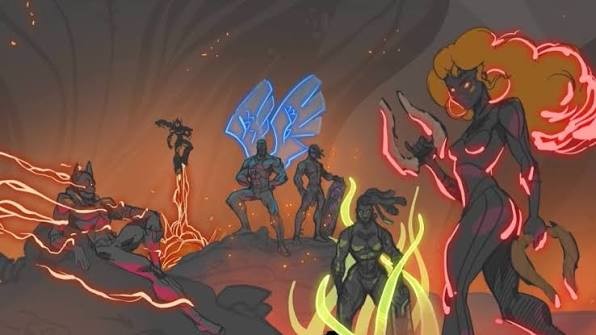
One player holds the line while the other plays the horde.

The six heroes standing together on a burning battlefield, official Sentinel 6 artwork

The Sentinel 6

All six heroes start on the table, and each one has hit points. You draw from a single hero deck of attacks, techniques, weapons, and tag assists, and decide which heroes to send into the fight with the cards you're holding.
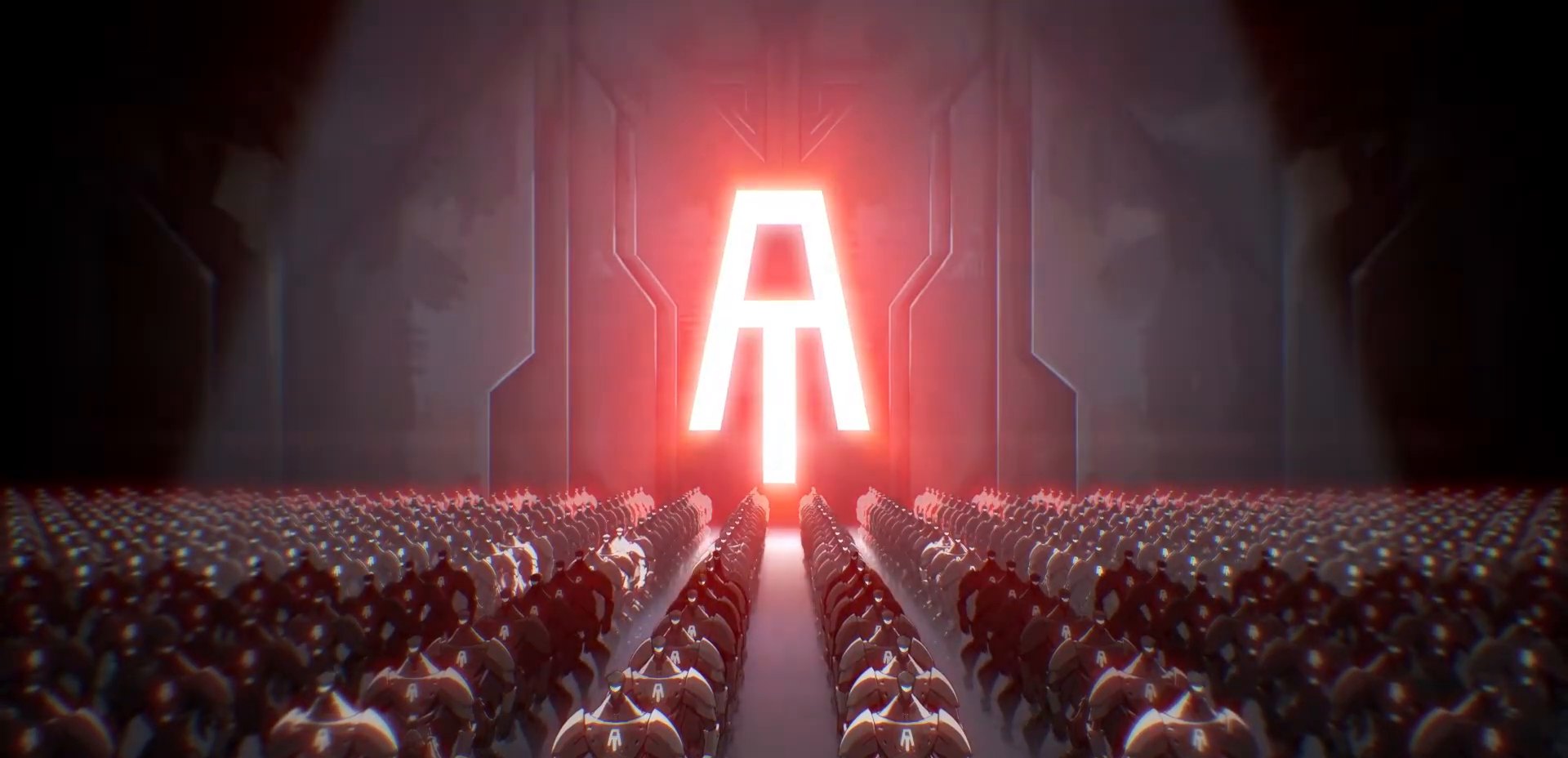
The robot army standing in formation under a glowing insignia

The horde

A bigger deck full of robot soldiers, elite enemies, and bosses. Every enemy card has attack directions printed on it, so where you place it matters. Somewhere in the reserves, one big bad waits face down.

Two heroes step up, and each one gets surrounded.

The six wait in the back line. Each round, the hero player sends two of them to the front. The horde player surrounds each hero on three sides, one enemy in front and one on each flank, so every hero fights their own battle.

Enemies hit from the directions printed on their cards, and a hero hits hardest where they face, so a hero is never fighting just one thing. Do you turn toward the elite and let the chaff chip at you, or clear the chaff and take the big hit?

There's no board. The cards make the battlefield.

Mind Heart Back line: the other four wait their turn Each hero faces three enemies: front, left, and right

How a round plays out.

  1. Draw your handThe hero player draws five from the hero deck.
  2. Send two to the frontPick the pair your hand supports best. A hand full of blasts wants Stryking Phoenix. A hand full of guards wants Mother Terra.
  3. The horde surrounds themThe horde player puts three enemies around each hero, one in front and one on each side, aimed by the directions on their cards.
  4. Play your cards, then it resolvesBoth players commit their cards, and the fight plays out on its own, auto-battler style. Damage comes off hit points.
  5. The next pair steps upThree rounds, two heroes each, so every hero gets their moment. Heroes who fall are out for good.

The six fight better in pairs.

MindHeart

Saint and Ali, rivals for Lead Stryker. Sending them up together is a gamble that pays off when it works.

SwordShield

One cuts through, one holds the line.

HandsFeet

Blasts from range while the fastest hero alive picks off whatever's left.

Tag assists. Like a fighting game, a tag assist card lets a hero in the back line jump in for one action, then step back out.
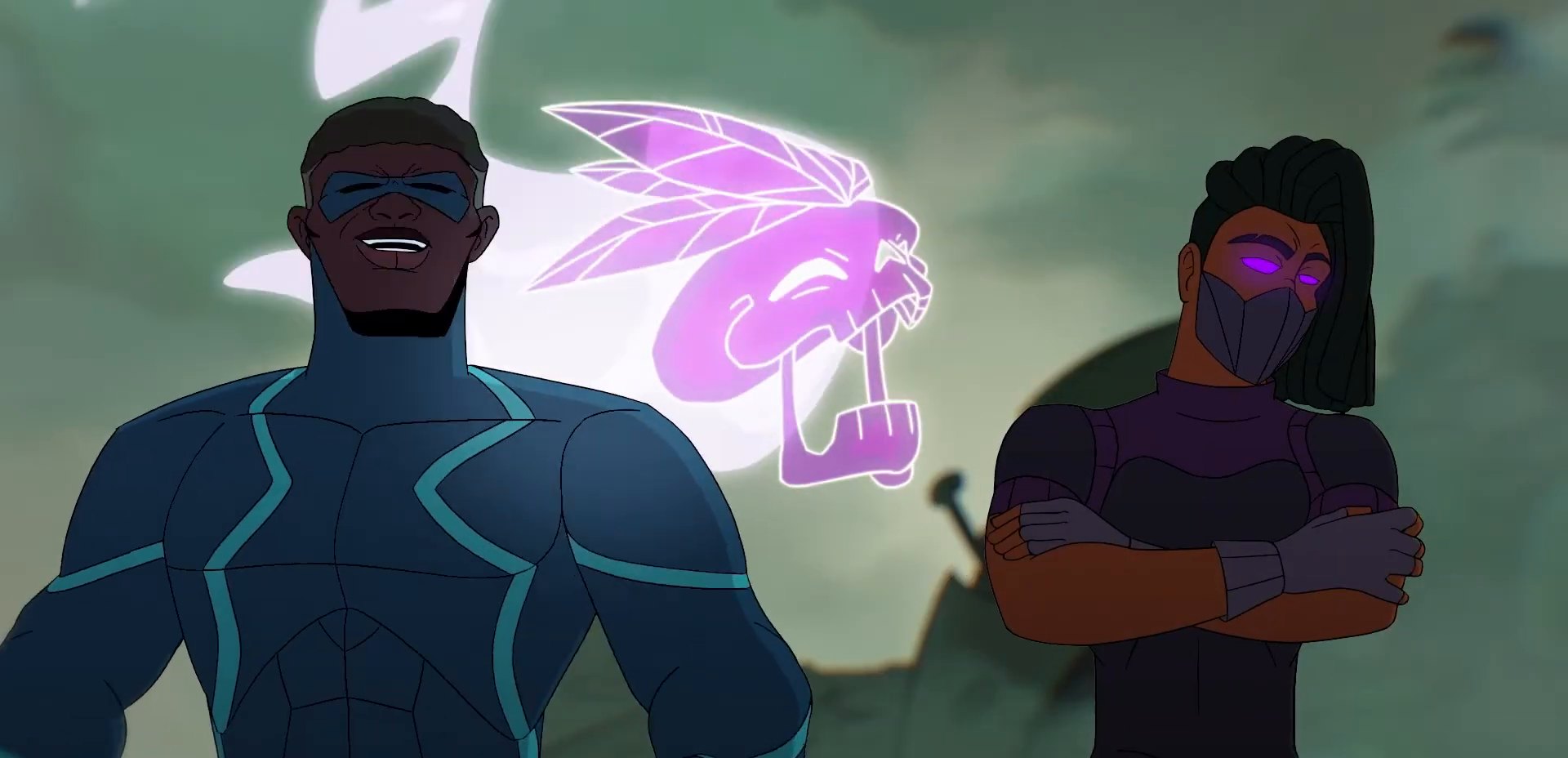
Blue Sage and Phantom X on the battlefield, with Phantom X's ghost spirit beside them
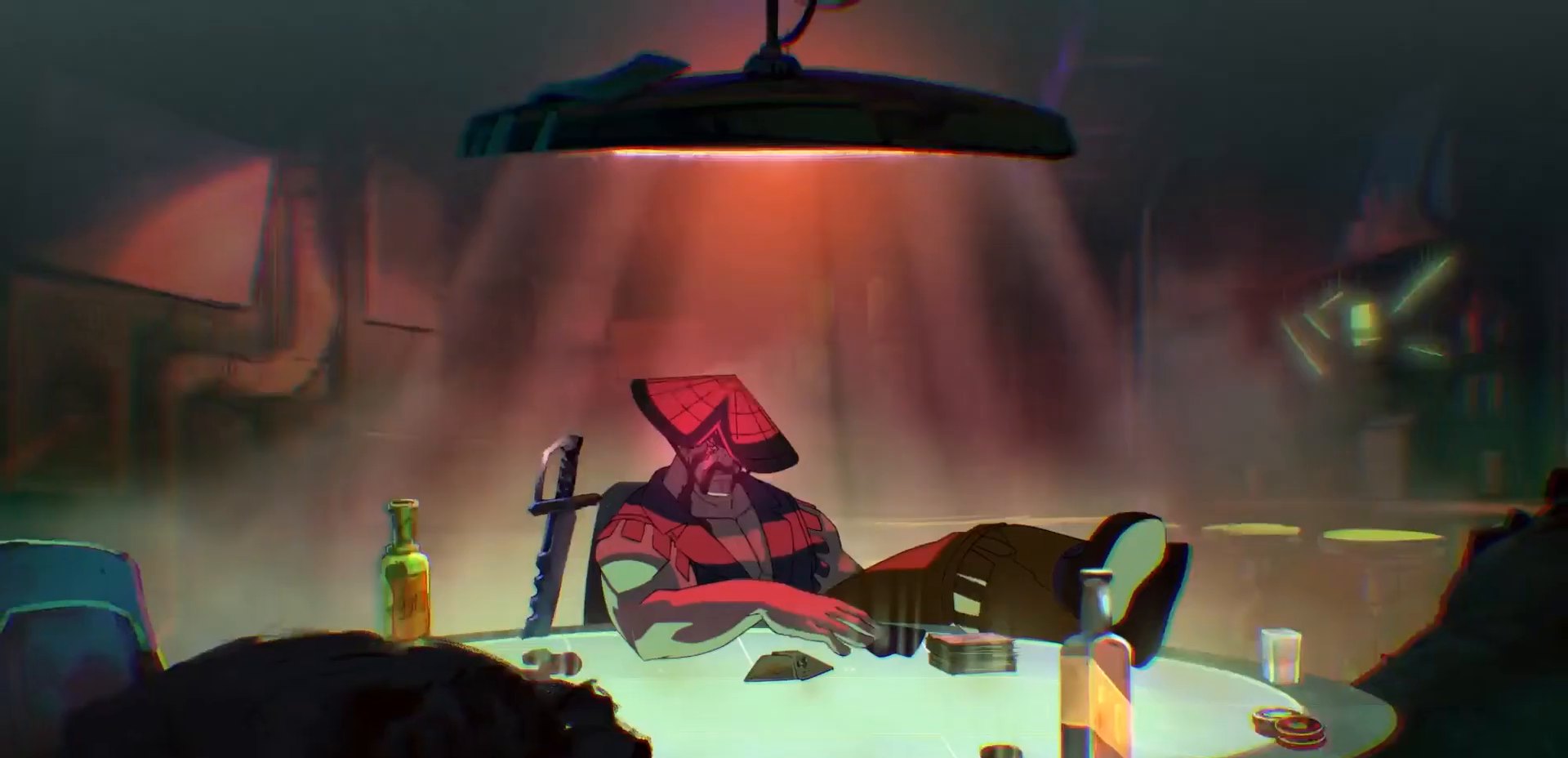
A figure in a wide hat lounging at a table under a red lamp, from the Sentinel 6 trailer

The big bad stays face down until you earn the reveal.

The horde player picks a big bad before the game and keeps it hidden. It could be Krath Mudaak. It could be someone working for him.

Early on, the heroes are too busy surviving to reach it. Clear enough of the chaff and you open a path for a direct attack. Land it, and the big bad flips face up and joins the fight.

Two ways to win, one for each side.

The Sentinel 6

Win by breaking through the horde, revealing the big bad, and taking it down before they run out of heroes.

The horde

Wins by outlasting the heroes. Knock out all six across the three rounds and Earth falls.

Every game tells a small version of the show: six people who'd rather not work together, a threat bigger than any one of them, and a villain they have to fight their way to.

Pick a side, and you're playing a different game.

Most trading card games hand both players the same kind of deck and the same kind of turn. Here, the two sides don't just look different, they play different.

Playing the Sentinel 6

You're holding the line. You decide who steps up and when, which way each hero faces, how to spread six heroes' hit points across three rounds, and when to spend a tag assist. It's a game of defense, timing, and knowing when to take a hit to land one.

Playing the horde

You're the pressure. You decide where every enemy lands and which way it attacks, when to throw an elite at a hero, and how long you can keep your big bad hidden. It's a game of numbers, ambush, and wearing heroes down.

That gives players an identity beyond their deck. Some will only ever play the heroes. Some will only ever play the horde. Both are collecting.

Made to collect from both sides of the table.

Alt-art cards

New art on a hero or villain you already know. Same card in play, a rarer card in the binder.

Alt-ability cards

New art and a new ability. Starter heroes and villains are simple; an alt-ability version brings a new tag assist or attack, so a chase card changes how you play.

Villain collectors

The horde deck is the biggest in the game, with chaff, elites, and bosses to chase, and it gets alt-art and alt-ability cards too.

Event cards for either side

A punch to the head works no matter who's throwing it. Neutral event cards slot into a hero deck or a horde deck.

And there's room for the whole universe: Rex, Grimm, Metro, Sankofa. Every character the show introduces can become a card.
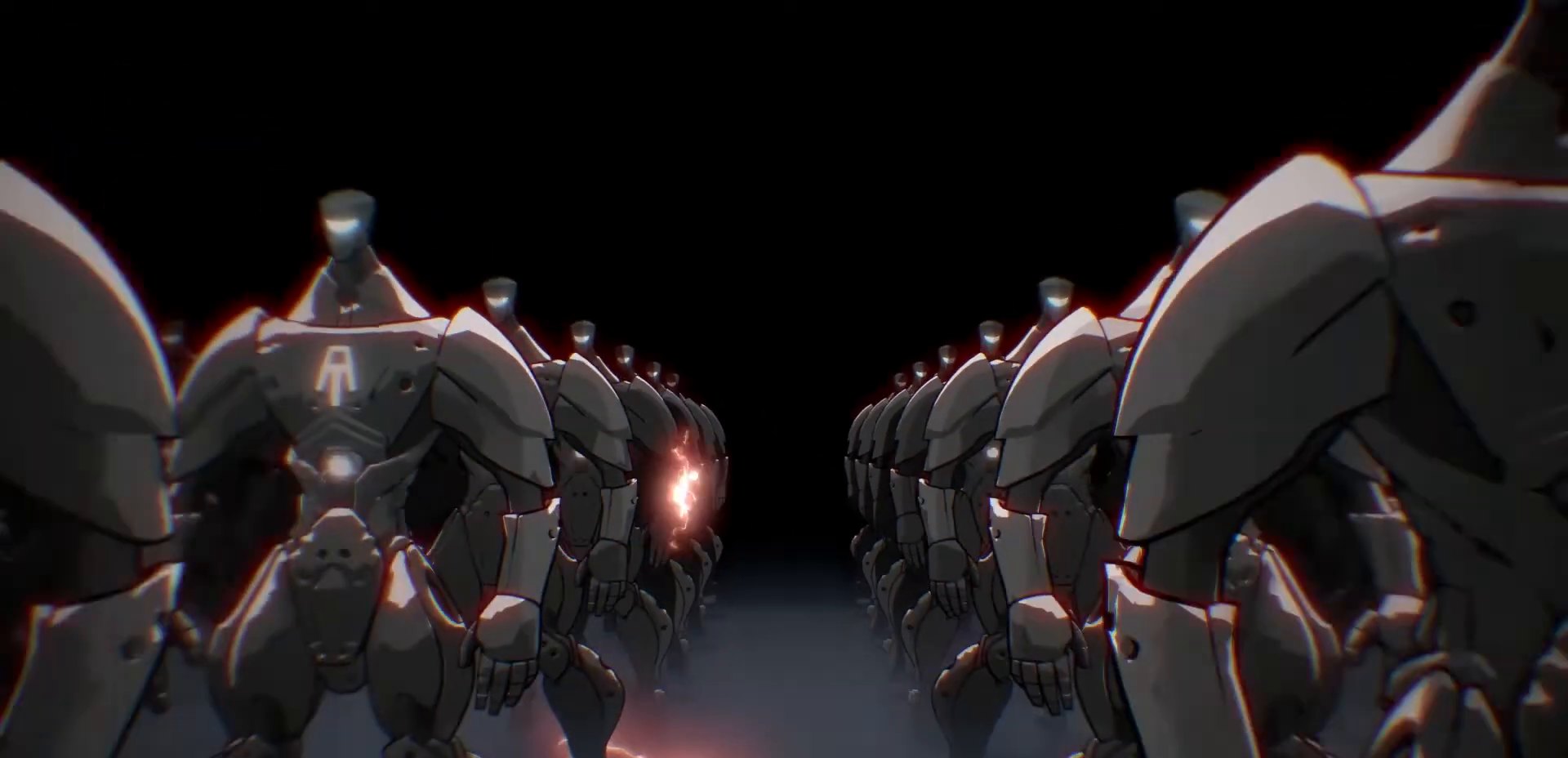
Rows of armored robot soldiers with glowing red eyes

Here's what the Sentinel 6 side could look like.

From the hero deck: a technique, a tag assist, and an event either side can play

Concept frames with working numbers, made to show the idea; final card design would be done with you. Every image is an unaltered still from the official Sentinel 6 trailer. AI never touches the game design. Tap any card to see it up close.

And here's what's coming for them.

The big bad, face down until the heroes break through

The arrows on each enemy show where it attacks from. The more arrows, the more dangerous the card.

We'd love to design a Blik game, once we know how it's played.

Blik might be the most game-shaped thing in Sentinel 6. It has programs, recruiting, and a Lead Stryker position. It's where Saint and Ali's rivalry starts, and it's what takes them around the world. Publicly, that's about all we could find.

It could sit alongside this game. A Blik card game would be a second way to play with the same heroes, one where they compete instead of fight.

Or it could replace it. If Blik turns out to be the heart of the show, we'd rather design the card game around it than around what you've seen in this deck.

Tell us how Blik is played, who plays it, and how a match is won, and we'll take it from there.
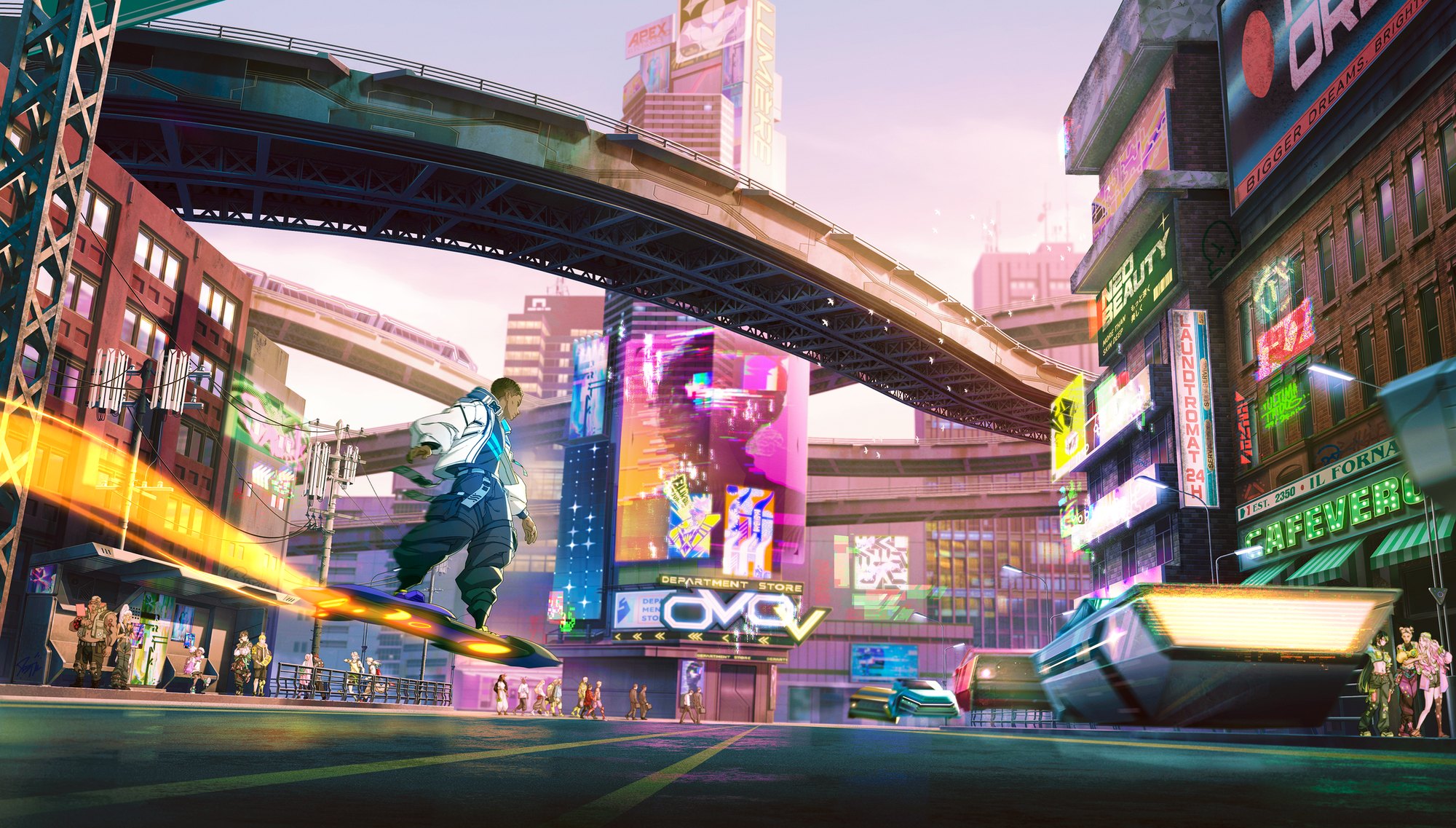
Saint Dubois riding a hoverboard through a neon city street, official Sentinel 6 artwork

We guessed at a lot, so tell us where we're wrong.

Who holds which aspect. Mind comes from Saint's character sheet, and Heart and Feet from what you've shared online. Hands, Sword, and Shield are our read of the trailer.

The villains. We know Krath Mudaak, the robot army, and Grimm. Who else is out there, and what are the robots called? We've been calling the villain side "the horde" as a placeholder, and we'll use your name for it.

What a normal week looks like. Do the six fight waves of enemies, one big threat at a time, or each other? The answer shapes the horde deck.

Everything here is a starting point built from the trailer, the Kickstarter, and your posts. If we nailed it, great. If we didn't, we'd love to fix it with you.

Who we are.

Pamplemoose Games is Zack Howe and Cole Beardsley. We design card games for IP holders, built around what makes each world its own instead of pasting a logo on a system we already had.

Before Pamplemoose, Zack co-founded Nyx Studios and designed HAVOC: Gen Zero, which funded on Kickstarter in under 30 minutes.

Would you by chance be open to a call to see if there's an opportunity for us to team up?

Zack Howe and Cole Beardsley
Pamplemoose Games
zack@pamplemoosegames.com
608-576-9798

Sentinel 6 and all characters and imagery are the property of Sable Kudzu Entertainment. Images are official Sentinel 6 artwork and stills from the official trailer, used here only to illustrate this concept. The game mechanics are original to Pamplemoose Games. Not for distribution.